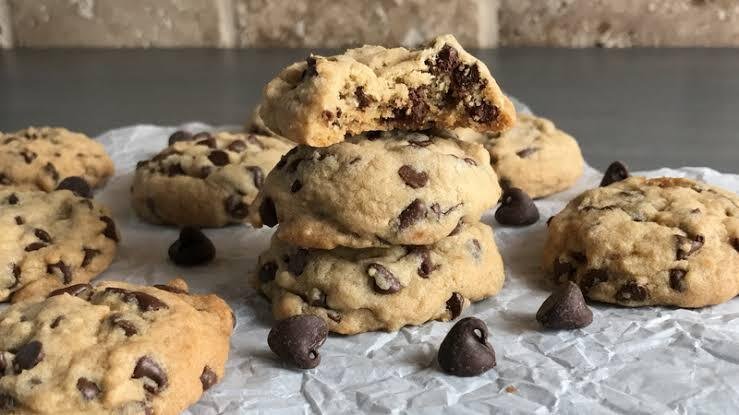
There’s a reason the chocolate chip cookie is a global icon. But within this beloved treat lies a great divide: the crispy versus the chewy. For many, the pinnacle of cookie perfection is a chewy chocolate chip cookie—one with a soft, almost fudgy center, a slightly crisp edge, and pockets of melted chocolate in every bite.
Achieving this texture is more than just following a recipe; it’s about understanding a little kitchen science. The texture of a cookie is primarily determined by its moisture content. According to food science research, soft and chewy cookies retain a higher water concentration than their crispy counterparts, which are baked longer and become drier . This guide will explain the science and provide a recipe engineered for maximum chewiness.
The Science of a Chewy Cookie
To make a cookie that stays chewy, the dough must be formulated to hold onto water during baking. Here are a few key principles:
1. Sugar Selection: Why Brown Sugar Matters
- The type of sugar you use is critical. Granulated sugar (sucrose) helps cookies spread and become crispy. Brown sugar, on the other hand, contains molasses, which is rich in fructose and glucose.
- These smaller sugar molecules are better at holding onto water, leading to a softer, chewier texture . For the chewiest cookies, the ratio of brown sugar should be higher than white sugar.
2. Flour Power: The Role of Protein
- Gluten, the protein in flour, is what gives baked goods structure. While too much gluten can make bread tough, in cookies, it contributes to a satisfying chew.
- Using bread flour instead of all-purpose flour is a trick used by experts like Alton Brown. Bread flour has a higher protein content, which promotes more gluten development and results in a chewier cookie .
3. The Secret of Cornstarch
- Adding a small amount of cornstarch to your dough is a popular hack for extra-soft cookies. Cornstarch helps to tenderize the flour’s protein and, when it heats up, it gelatinizes and absorbs moisture, preventing it from evaporating during baking .
4. Don’t Overbake
- This is the most crucial step. The center of your cookies should still look slightly underbaked and soft when you take them out of the oven. They will continue to bake from the residual heat on the sheet and firm up as they cool . The average baking time for chewy cookies is about two and a half minutes less than for crispy ones .
The Perfect Chewy Chocolate Chip Cookie Recipe
This recipe incorporates all the scientific principles above to guarantee a chewy, decadent cookie.
Ingredients
- 2 ¾ cups all-purpose flour (or bread flour for maximum chewiness)
- 1 teaspoon baking soda
- 1 teaspoon cornstarch (for extra softness)
- ½ teaspoon salt
- 1 cup (2 sticks) unsalted butter, melted and slightly cooled
- 1 cup packed light brown sugar (more moisture for chewiness)
- ½ cup granulated sugar
- 2 large eggs
- 2 teaspoons pure vanilla extract
- 2 cups semisweet chocolate chips or chunks
Instructions
- Prepare: Preheat your oven to 350°F (175°C). Line two baking sheets with parchment paper.
- Mix Dry Ingredients: In a medium bowl, whisk together the flour, baking soda, cornstarch, and salt. Set aside.
- Combine Wet Ingredients: In a large bowl, whisk the melted butter and sugars together until well combined. Add the eggs and vanilla, and whisk until the mixture is smooth and glossy.
- Combine Wet and Dry: Pour the dry ingredients into the wet ingredients and stir with a rubber spatula until just combined. Be careful not to overmix, as this can develop too much gluten and make the cookies tough.
- Add Chocolate: Fold in the chocolate chips or chunks.
- Chill the Dough: This is an optional but highly recommended step. Cover the bowl and chill the dough in the refrigerator for at least 30 minutes. Chilling solidifies the butter, which prevents the cookies from spreading too much and creates a thicker, chewier texture .
- Scoop and Bake: Scoop heaping tablespoons of dough onto the prepared baking sheets, leaving about 2 inches between them.
- Bake: Bake for 10-12 minutes, or until the edges are golden brown and the centers are still soft and slightly pale. Do not overbake.
- Cool: Let the cookies cool on the baking sheet for 5 minutes—this is a critical step for setting the texture—before transferring them to a wire rack to cool completely .
Pro Tips for Success
- Weigh Your Flour: If you have a kitchen scale, weigh your flour (approximately 330 grams) to ensure you aren’t using too much, which can result in dry cookies .
- Add a Secret Ingredient: For an extra depth of flavor, try adding a teaspoon of instant coffee granules dissolved in a drop of water or a teaspoon of soy sauce. These ingredients enhance the chocolate flavor and add a subtle complexity .
- Use Chopped Chocolate: For the best “melty” pockets, use chopped chocolate bars instead of standard chips .
Frequently Asked Questions (FAQs)
Q: Why are my cookies flat?
A: Flat cookies are usually caused by butter that is too warm. If the butter is melted or overly soft, the cookies will spread too much in the oven. Make sure to chill your dough for at least 30 minutes . Using expired baking soda can also be a culprit .
Q: Can I use salted butter?
A: Yes. If you use salted butter, simply reduce or omit the salt called for in the recipe to avoid overly salty cookies .
Q: Can I freeze the cookie dough?
A: Absolutely! Scoop the dough into balls, place them on a baking sheet, and freeze until solid. Transfer the frozen dough balls to a freezer bag. When you’re ready to bake, place them on a baking sheet and bake directly from frozen, adding 1-2 minutes to the baking time .
Q: How should I store the cookies?
A: Store baked cookies in an airtight container at room temperature for up to a week to maintain their softness . You can also place a slice of plain bread in the container, which will absorb excess air and help keep the cookies from drying out.