You’ve seen the vibrant green concoctions all over social media—the celery, cucumber, and kale blends promising a fresh start and a “detox” reset. While it’s true that green juice is packed with nutrients, the idea of a juice “detox” often comes with more hype than science. Let’s cut through the noise and explore what green juice can really do for you, share five delicious recipes to get you started, and answer your most pressing questions.
What is a Green Juice Detox?
At its core, a green juice detox is a short-term dietary practice that involves consuming fresh, cold-pressed juices made primarily from green vegetables like kale, spinach, celery, and cucumber. These juices are typically low in calories and high in vitamins and antioxidants. Scientific analysis shows that green juices have a high total phenolic content and total antioxidant capacity, indicating they are a potent source of beneficial plant compounds.
However, it is vital to understand what “detox” actually means. Your body is already equipped with a highly sophisticated detoxification system. Your liver, kidneys, and digestive tract work continuously to process and eliminate waste and toxins. No juice is scientifically proven to “cleanse” your body of toxins in a way that your body can’t already do on its own.
Instead of a “cleanse,” think of a green juice detox as a nutritional reset. It’s a way to flood your body with concentrated, easily absorbable vitamins and minerals, increase your vegetable intake, and take a conscious break from processed foods and sugar. This can support your body’s natural processes and leave you feeling more energized.
The Truth About Juice Cleanses
Myth vs. Reality
- The Weight Loss Myth: Many people try a juice cleanse for rapid weight loss. While you may see the scale drop, this is often due to the loss of water weight and muscle glycogen, not fat. This is because calorie intake drops drastically, and your body uses up its glycogen stores. Once you return to normal eating, the weight tends to come back.
- The Meal Replacement Myth: Green juice is a fantastic supplement, but it should not be used as a meal replacement. Its low protein, fat, and fiber content means it won’t keep you full or provide the sustained energy you need. Using juices for extended periods can lead to nutrient deficiencies, fatigue, and other health issues.
The Real Benefits
Despite the myths, a nutrient-rich green juice offers many genuine health benefits:
- High Antioxidant Boost: The powerful antioxidants in green juice fight inflammation and support overall health.
- Supports Liver Health: Ingredients like ginger and turmeric provide nutrients that support the liver’s second phase of detoxification.
- Improves Digestion: For those with sensitive stomachs, a juice made with low-fiber, alkalizing ingredients can be gentler on the digestive system and aid in reducing bloating.
- Increases Vegetable Intake: It’s an easy and delicious way to consume a large amount of leafy greens that you might not otherwise eat.
5 Green Juice Recipes for a Fresh Start
Here are five unique green juice recipes to get you started. Each one is designed to be flavorful, refreshing, and packed with nutrients. All recipes are vegan and take about 10 minutes to prepare.
1. The Classic Cleanse
A perfect starting point, this recipe uses a balanced blend of greens and fruit for a refreshing, mildly sweet taste.
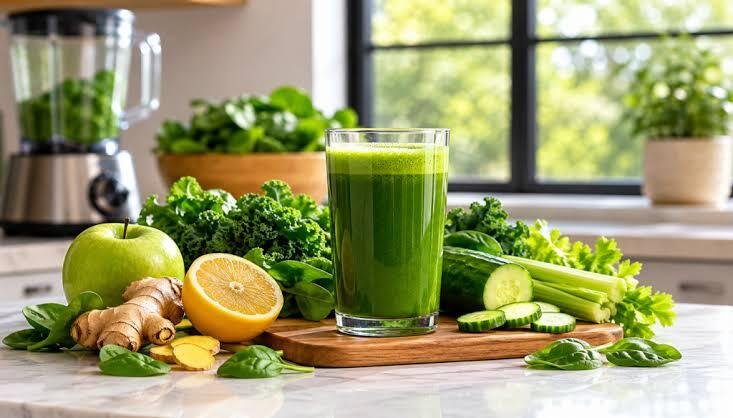
- Ingredients: 1 cucumber, 2 celery stalks, 1 green apple, 1 cup packed spinach, 1 cup de-stemmed kale, juice of 1 lemon, 1-inch fresh ginger.
- Method: Wash all ingredients. Core the apple and cut all produce into pieces that fit your juicer. Feed through the juicer, alternating soft and firm items. Stir in the lemon juice and serve immediately over ice.
- Nutrition (approx.): Calories: ~100, Carbs: 23g, Fiber: 6g, Protein: 4g
2. Gut-Soothing Ginger & Mint
Recommended by nutritionists, this recipe is perfect if you’re feeling bloated or want a gentle, alkalizing drink that supports digestion.
- Ingredients: 1 cup cucumber, ¼ cup celery, 6-8 chopped mint leaves, 1 tsp grated ginger, ½ inch turmeric root (optional), a pinch of Celtic salt, 1 tsp lemon juice, 200ml water.
- Method: Combine all ingredients in a blender and blend until smooth. Strain for a clearer juice or drink as a blended smoothie.
- Benefit: The combination of ginger, turmeric, and mint is known to be anti-inflammatory and aids in soothing the gut lining.
3. The “Green Power” Immunity Shot
This robust recipe uses seasonal ingredients to pack a powerful vitamin and mineral punch. Zucchini and green pepper might seem unusual, but they create a hydrating, mildly sweet base with the pear.
- Ingredients: 100g kale, 200g zucchini, 1 handful of chard leaves, ½ bunch of fresh parsley or mint, juice of 1 lemon.
- Method: Wash all ingredients thoroughly, remove tough kale stems, and process through your juicer.
- Benefit: Kale and chard are rich in vitamins K, C, and calcium, while the lemon provides a potent dose of vitamin C for a powerful antioxidant boost.
4. Low-Oxalate & Keto-Friendly
For those watching their carb or oxalate intake, this recipe swaps high-oxalate greens for spinach and loads up on herbs and cucumber for a refreshing, light drink.
- Ingredients: 2 cups fresh spinach, 1 medium cucumber (peeled), juice of 1 lemon, ½ cup fresh cilantro, ¼ cup fresh mint leaves.
- Method: Wash all ingredients. Add to a blender with 2 cups of ice and blend until smooth. For a thinner consistency, add a splash of water.
- Nutrition (approx.): Calories: ~33, Carbs: 8g, Fiber: 2g, Protein: 2g
5. Spicy & Sweet Jalapeño Zing
If you like a little heat, this recipe is for you. The jalapeño adds a spicy kick that pairs surprisingly well with the apple and parsley, making a unique and invigorating juice.
- Ingredients: 1 celery stalk, 1 cucumber, 2 apples, ½ green capsicum (bell pepper), 1 handful of parsley, a 2cm knob of ginger, 1 jalapeño (start with half if you’re sensitive to spice).
- Method: Wash all ingredients. Cut the jalapeño in half and remove the seeds if you prefer less heat. Juice all ingredients, finishing with the apples to help push the lighter greens through the press.
How to Choose the Best Ingredients
- Buy Local and Seasonal: Pears and zucchini are excellent choices in late summer, while kale and spinach are nutrient-dense staples year-round.
- Wash Everything Thoroughly: Produce can harbor dirt and bacteria; a thorough wash is essential before juicing.
- Peel or Not to Peel: Generally, it’s best to leave the skin on fruits and vegetables like apples and cucumbers for extra nutrients. However, you may want to peel your ginger and lemon for a milder flavor. For a low-oxalate juice, you can peel the cucumber.
- Remove Seeds: While you can juice jalapeño seeds for maximum heat, most prefer to remove them for a milder, more pleasant flavor.
A Note on Methods: Juicer vs. Blender
There are two main ways to make green juice:
- Juicer: This machine separates the liquid from the fiber, resulting in a smooth, pulp-free drink. The nutrients are more concentrated and absorbed more quickly by the body.
- Blender: If you have a blender, you can make green juice by blending all ingredients with a little water and then straining the mixture through a cheesecloth or a fine-mesh sieve. This method is more affordable and still yields a delicious drink.
- Smoothies: You can also simply blend all ingredients together without straining to create a smoothie. This retains all the fiber, which is beneficial for digestion and satiety.
FAQ: Your Top Green Juice Detox Questions Answered
Q1: Can a green juice detox help me lose weight quickly?
The weight you lose is primarily water and glycogen. It is not a sustainable or healthy method for long-term fat loss. It can, however, be a jumpstart to a healthier lifestyle.
Q2: Is green juice a meal replacement?
No. Green juice lacks the protein, healthy fats, and fiber needed for a balanced meal. It should be considered a nutrient-dense supplement to a healthy diet, not a substitute for food.
Q3: Does my body really need a detox?
Your body naturally detoxifies itself 24/7 through the liver, kidneys, and digestive system. A juice “cleanse” doesn’t speed this up, but it can provide nutrients that support this natural process.
Q4: What are the side effects of a juice cleanse?
You may experience hunger, headaches, fatigue, and dizziness due to low calorie intake and blood sugar fluctuations. Long-term or extreme cleanses can be dangerous, especially for those with diabetes or kidney issues.
Q5: How can I support my liver naturally?
The best way to support your liver is to limit alcohol, maintain a healthy weight, stay physically active, and eat a diet rich in whole foods while minimizing ultra-processed items and saturated fats.
Q6: Can I make green juice if I have digestive issues?
Yes, but choose ingredients that are low in oxalates and easy to digest, such as cucumber, celery, and mint. Juicing helps break down fiber, which can be a relief for those with sensitive digestive systems.
Q7: Is it better to juice or eat whole vegetables?
It’s not a matter of better, but of different. Juicing provides a concentrated dose of nutrients without the fiber, making it easy to digest. Eating whole vegetables provides more fiber, which is essential for digestive health and feeling full. The best approach includes both.
The Bottom Line
Green juice is a powerful, nutrient-rich addition to a healthy lifestyle, but it is not a magic bullet. It’s a tool for adding more vegetables to your diet, supporting your body’s natural processes, and feeling refreshed. Enjoy your green juice, but focus on a balanced diet and healthy habits for lasting wellness.